The anthem as a form of expression
Elton John didn’t just write songs. With him, emotion became a spectacle. His music, his style, his stage presence are part of the same expressive architecture—where the intimate becomes a manifesto, and truth as well.
Since the 1970s, Elton John has challenged his time. He dressed it in colour and light. He sang it out loud. His melodies are anthems not because they aim to please, but because they set us free. Because they speak of pain, and his voice interprets states of the soul with a disarming honesty.
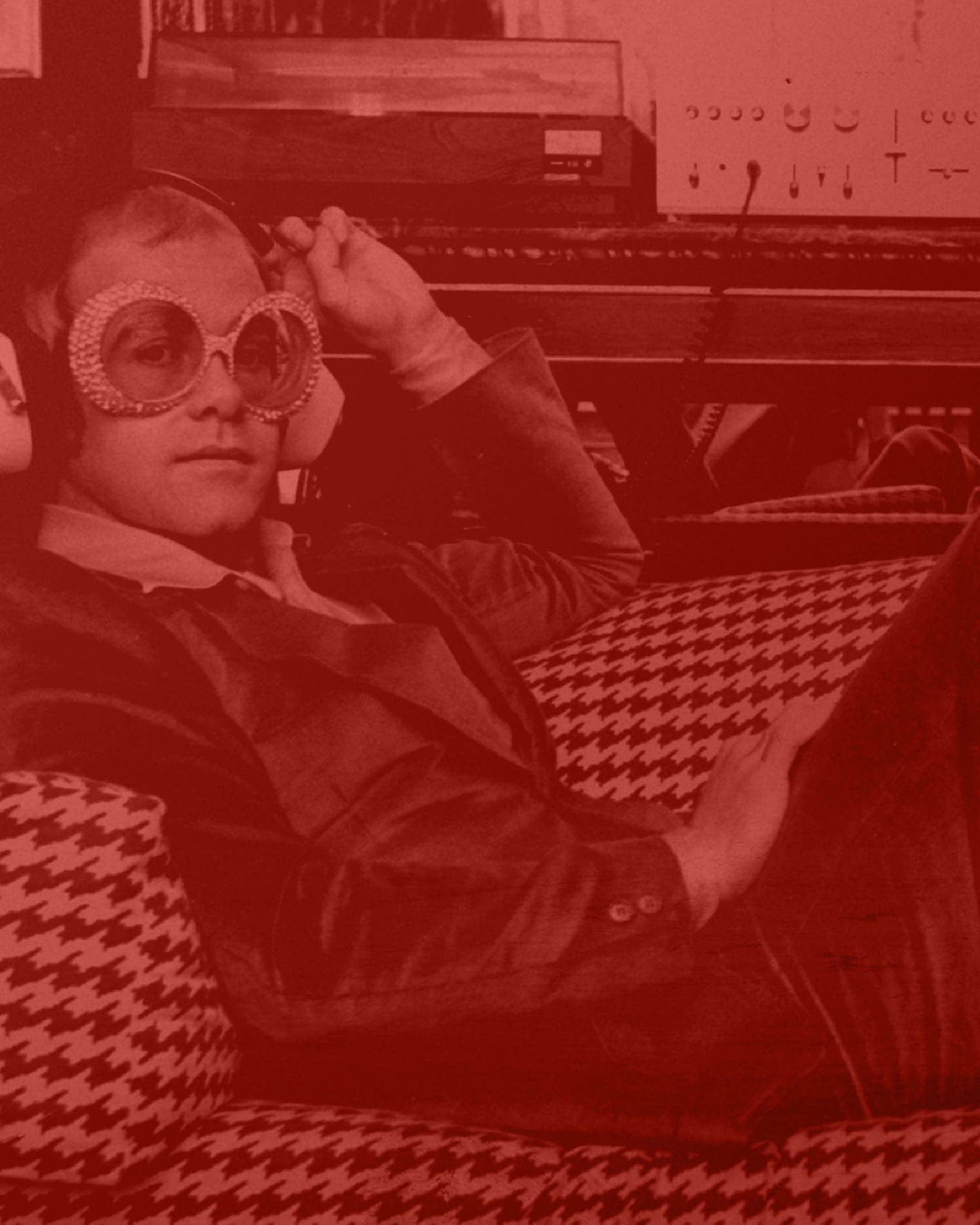
But beyond the piano, Elton John is a profoundly visual figure. Far from discretion, his style embraces excess as affirmation. Impossible hats, sunglasses with a soul of their own, suits that demand attention. It’s not costume—it’s self-expression. A way of saying that identity doesn’t shrink, it expands.
In him, sophistication doesn’t exclude irony, nor does nostalgia rule out the avant-garde. Elton John is, above all, a free creator: able to blend the classical with the daring, the elegant with the electric, the theatrical with the sincere. Every gesture, every note, every silhouette has intention, rhythm, memory. Everything in him is a declaration.
His work reminds us that sometimes, we must be brave. That there are songs where everything fits: the form, the essence, the lyrics. Melodies that speak of what we feel, even when we don’t know how to put it into words. And they make us resonate, as if they were telling, out loud, something deeply our own.
Authenticity isn’t always quiet—it can be a gesture of freedom. Elton John created a new way to celebrate life: in full colour, at full volume. Like an anthem.
Related posts