Observation as knowledge.
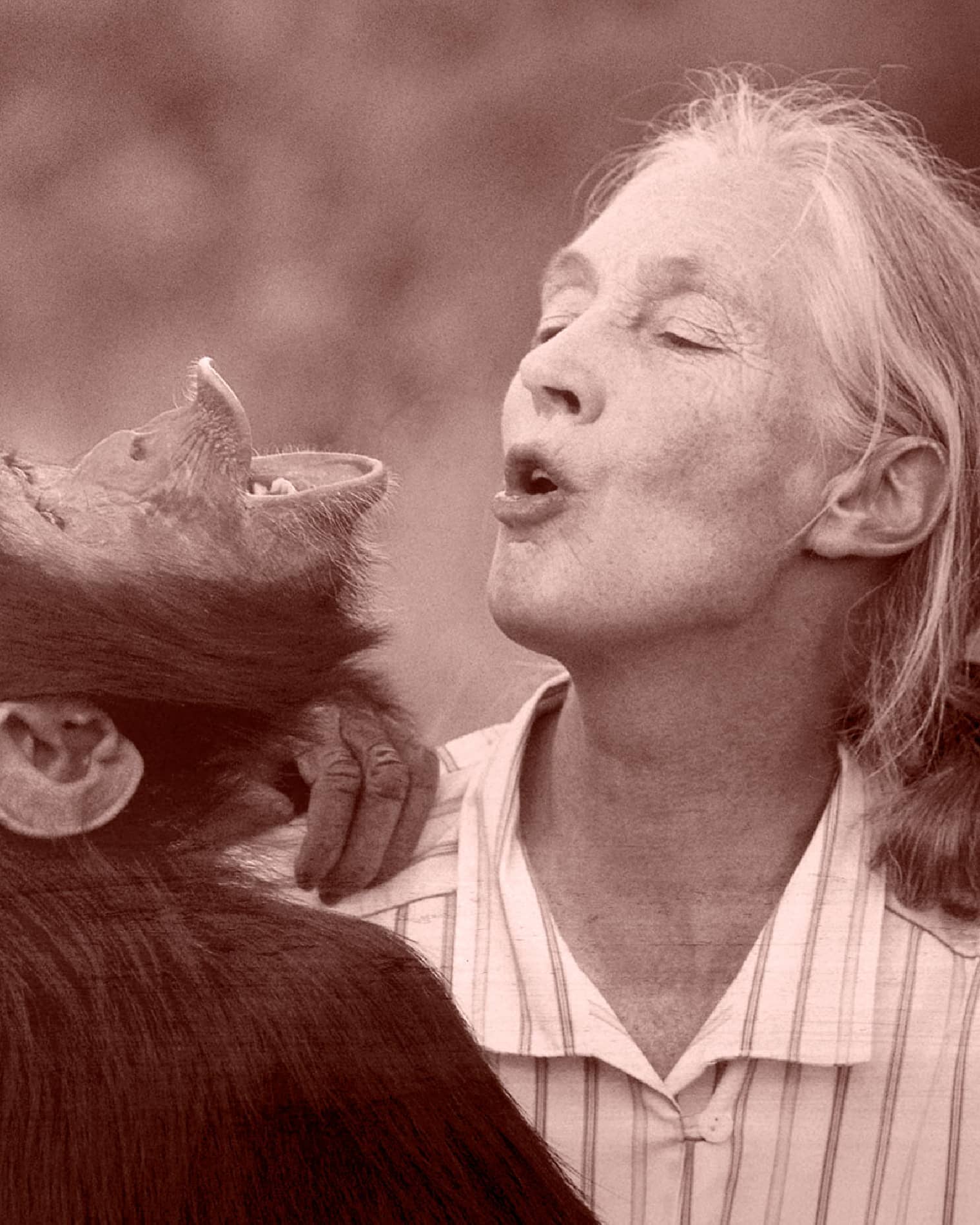
For Jane Goodall, understanding the world begins with attention. Her work with chimpanzees in Gombe National Park transformed science precisely because it started in a radically simple way: watching, listening, waiting.
For decades, her research revealed something essential: nature is not a system to be analysed from the outside, but a complex network of relationships that can only be understood through patience and empathy. Goodall introduced into primatology a sensibility that changed the way animal behaviour is studied and, at the same time, the way we look at ourselves.
Her discoveries challenged deeply rooted ideas. When she documented that chimpanzees used tools, she broke a boundary that for centuries had defined what it meant to be human.
But her legacy goes far beyond research. Jane Goodall understood that knowledge also implies care. Her work gradually evolved toward conservation and the protection of ecosystems, reminding us that every human action leaves a mark on the natural balance.
In her thinking, science and ethics coexist naturally. To observe means to take responsibility for what is understood. Listening to nature implies recognising its value and accepting that our presence must be conscious and respectful.
Her legacy is measured not only in scientific discoveries, but in a way of understanding knowledge itself: with humility, curiosity and respect. Goodall reminds us that understanding the world also means learning how to coexist with it.
Like the great figures who have transformed the way we think, Jane Goodall never sought prominence, but truth. Her greatest lesson is both simple and radical: to understand life, we must first learn to observe it.
Related posts