Nonconformity as a language.
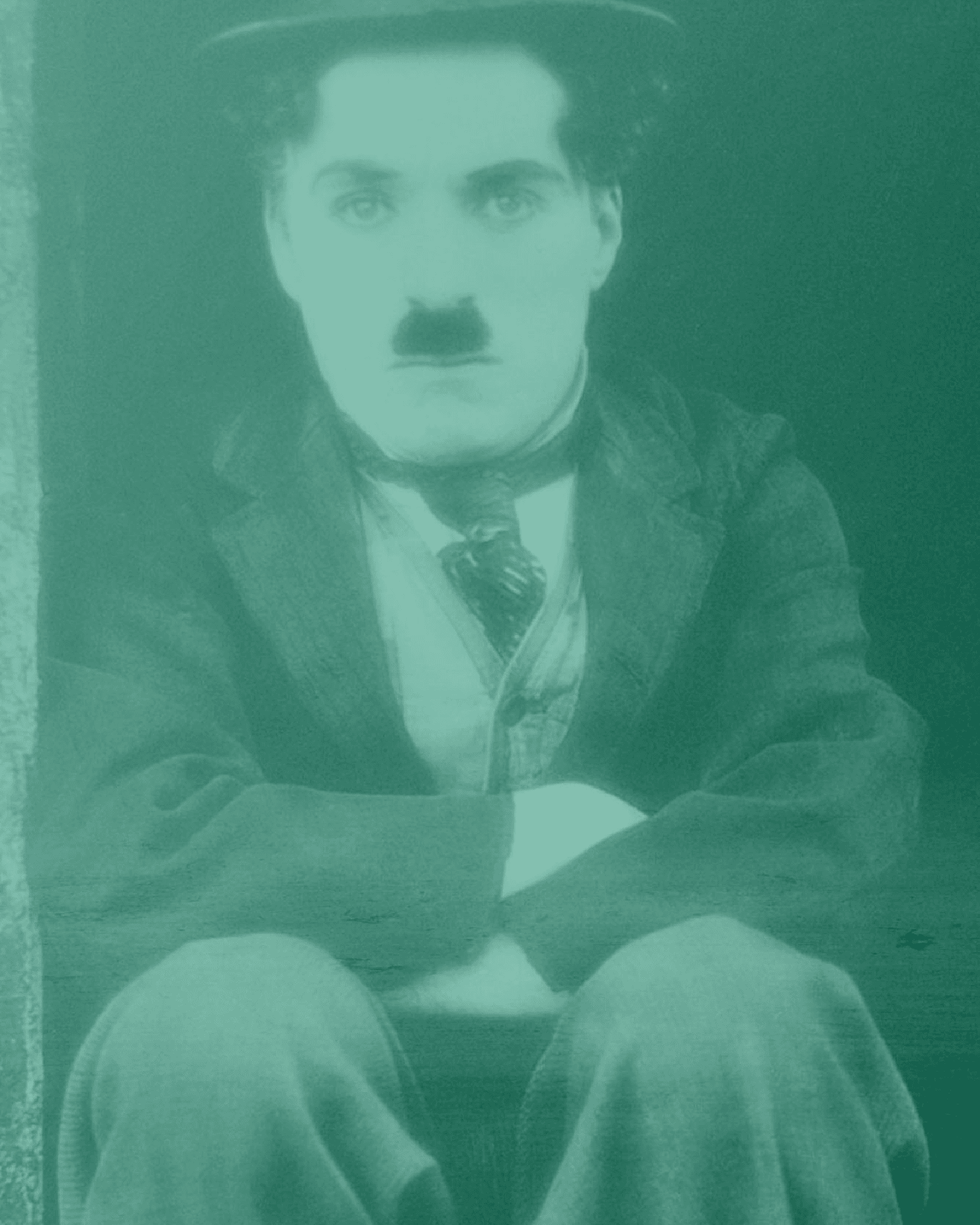
Charles Chaplin understood before anyone else that humour could be a profoundly critical tool. Behind the seemingly innocent figure of Charlot, he created a character capable of questioning the established order with humanity and tenderness. His gaze observed the world from another place, never fully fitting into the conventions of his time.
Chaplin turned nonconformity into a form of creation. Every gesture, every scene and every silence responded to a precise intention: to move, to unsettle, or to provoke reflection. His cinema was never mere entertainment; it was a way of looking at society with sensitivity and irony, capable of unsettling some and inspiring others.
His alter ego, Charlot, was elegant and clumsy at the same time, fragile yet resilient, absurd and remarkably lucid. An outsider who found beauty in imperfection and dignity in what seemed small or insignificant.
Beyond his cinematic work, Charles Chaplin’s true legacy is his nonconformist attitude. That of someone who understands that creation necessarily involves questioning established norms.
He was also a visionary. Modern life and its advances have given rise to a society obsessed with speed, productivity, and repetition—something Chaplin foresaw with remarkable insight in Modern Times, a masterpiece of his cinematic imagination. In contrast, the humanity of Charlot continues to remind us of the importance of seeing the world differently, of pausing to appreciate the small things, and of preserving our sensitivity in an increasingly industrialized and technological world.
Because nonconformity is not only about questioning what exists, but about finding new ways of making, feeling and inhabiting the world. In that continuous movement that, like Charlot, walks away towards the horizon.
Related posts