Vision as rupture. Form as language.
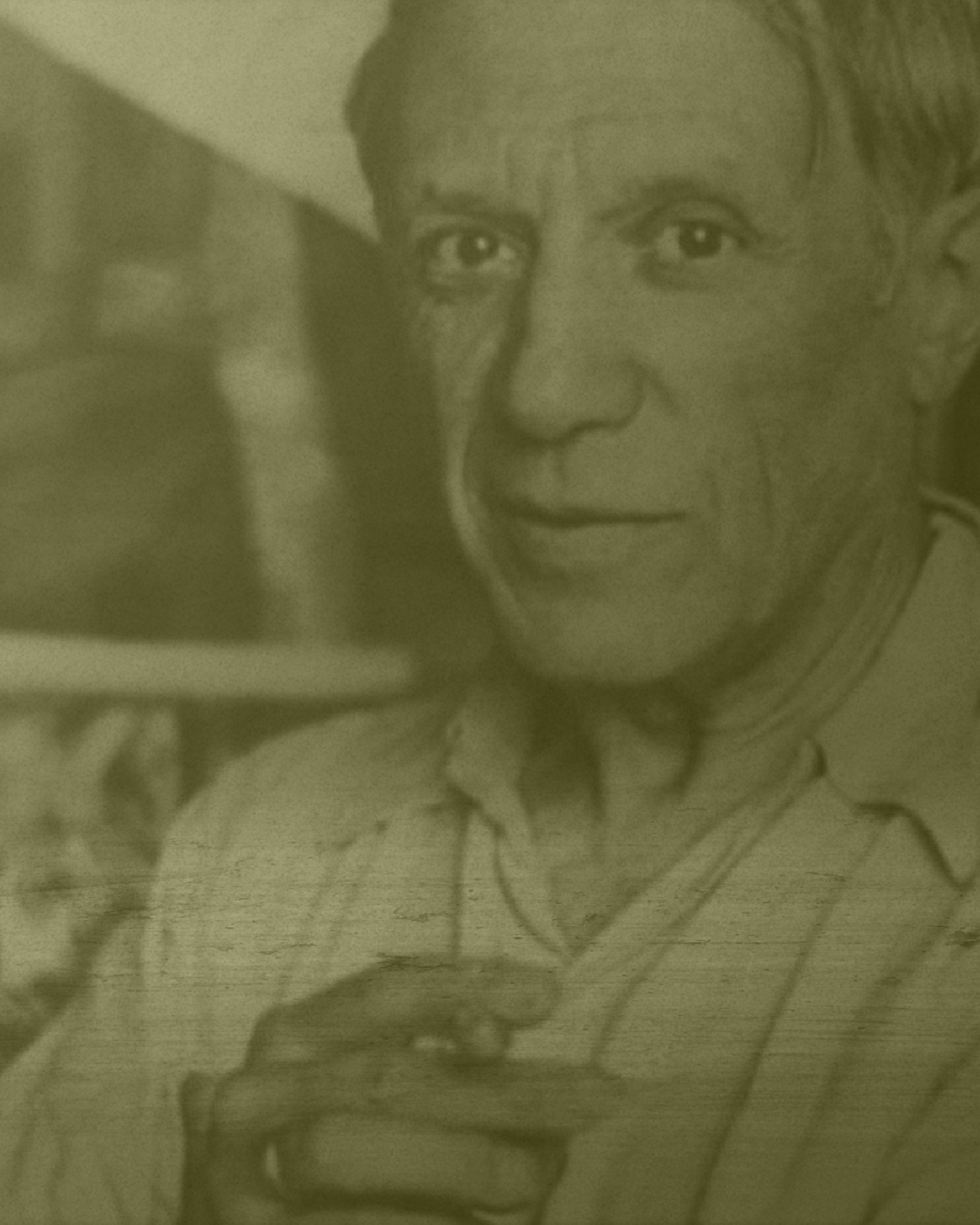
For Pablo Picasso, creation was not an act, but a state of being. It was not about painting what he saw, but about discovering what did not yet exist. Every phase of his work was a radical exploration of form, emotion and vision, a relentless search to understand the world from angles no one had imagined before.
For Picasso, creating was not about reproducing reality, but dismantling it. His work shows that art is born from questioning, taking apart and rebuilding from the origin. Where others saw a limit, he saw an opportunity for reinterpretation. Form, in his universe, was a constant question.
Cubism marked his definitive revolution. Fragmenting in order to reveal. Decomposing to understand. Breaking perspective to construct a new one. He did not seek rupture for provocation’s sake, but out of pure clarity: only by dismantling what is known can what is true emerge.
He broke with what he had learned to discover new readings of the everyday. Experimentation, materiality and a critical gaze were always part of his process, at once technical and visceral.
Each stage of his work is a declaration of inner coherence. From the simplest line to the most radical composition, Pablo Picasso eliminated the superfluous, refined the stroke, trusted the precision of the minimal gesture. He believed that form should reveal intention, not conceal it.
His legacy does not reside solely in the movements he founded or transformed, but in the stance that made them possible: to look with freedom, think with risk and create with honesty. To understand that innovation is an act of awareness, and that the new emerges when what seems inevitable is challenged.
Like all great creators, Picasso did not work for his time, but to transcend it. His work reminds us that form is a living language, capable of altering our perception and expanding the way we inhabit the world.
His legacy lies not only in the paintings that transformed art history, but in the philosophy that made them possible: to create without fear, to think without borders, to search without rest. Pablo Picasso did not paint for the present, but for time itself. His greatest lesson was to remind us that the true creator does not imitate reality: he reinvents it.
Related posts