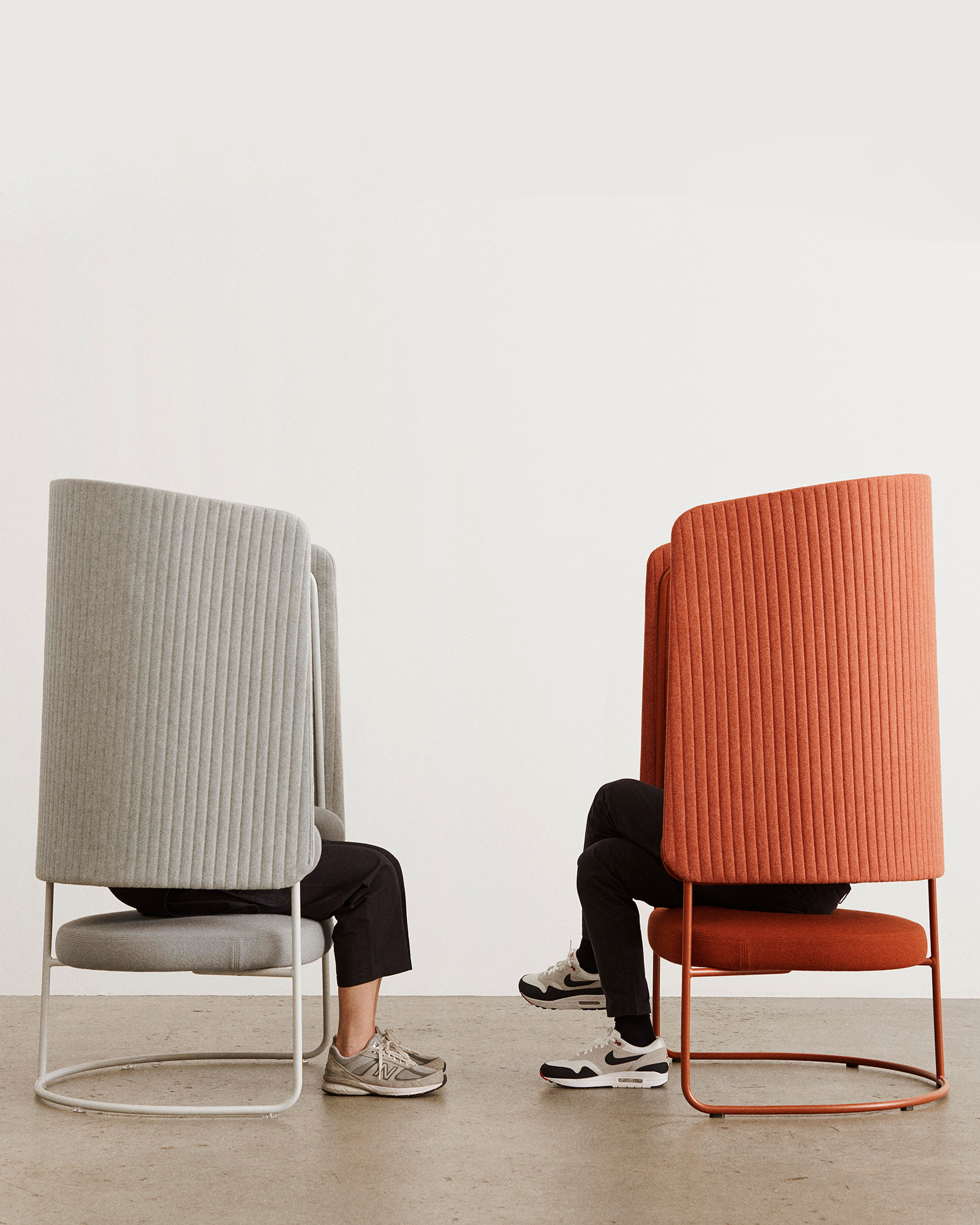
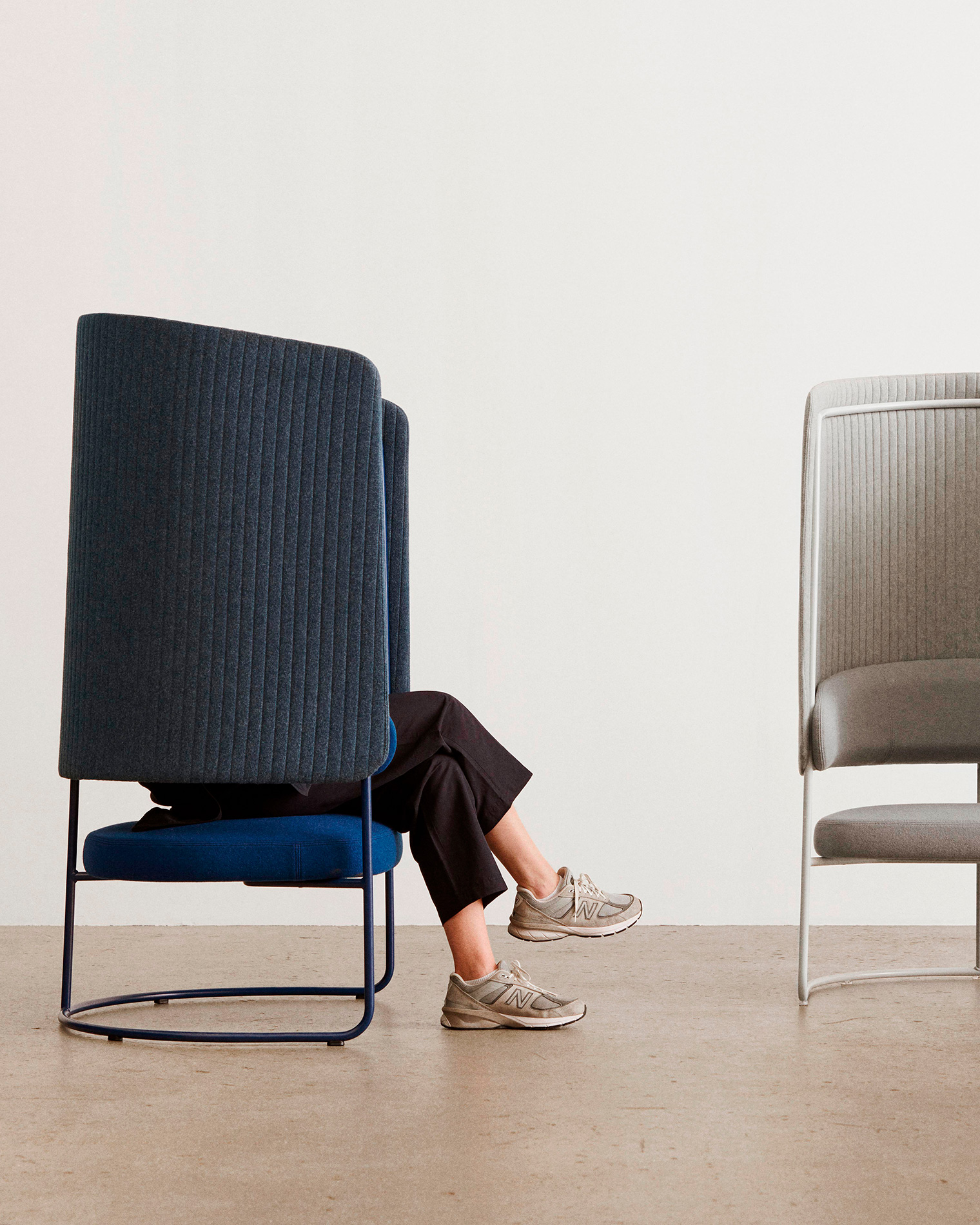
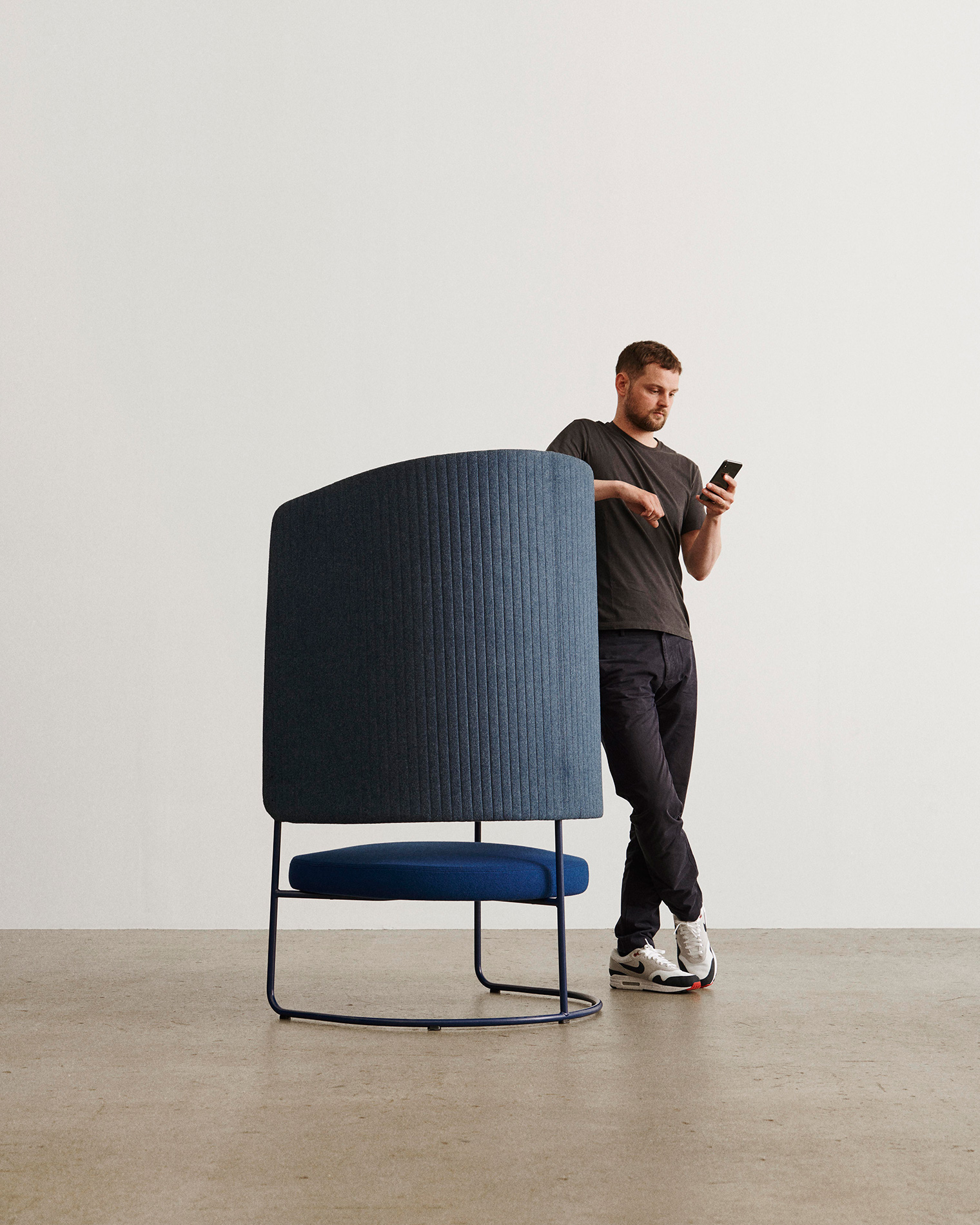
Opus by +Halle. Light intimacy for shared spaces.
Opus begins with a simple question: how can a personal space be created using the minimum of means? The answer, developed by the Swedish studio Form Us With Love for +Halle, adopts a radical approach, reducing structure and materials to their bare essentials in order to build intimacy with as little as possible. The result is a seating collection that redefines privacy in collective environments through lightness, proportion and spatial intelligence.
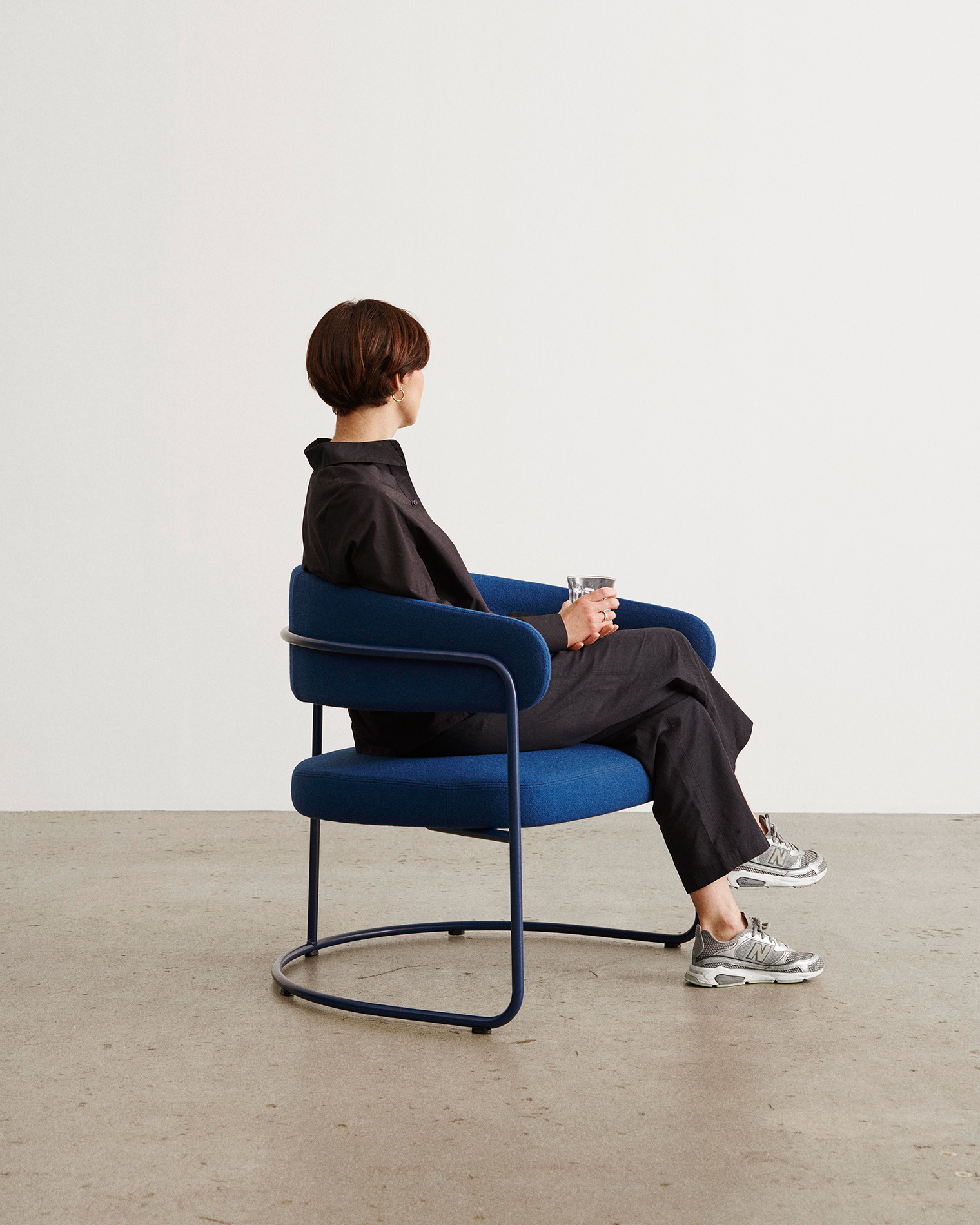
Inspired by the great mid-20th-century classics, Opus is a contemporary reinterpretation of the club chair: a piece capable of offering a sense of retreat without isolation.
Designing with only what is necessary.
The collection is rooted in in-depth research into the concept of personal space within shared environments. Rather than relying on bulky, enclosed solutions, Opus deliberately moves in the opposite direction.
The research was carried out at full scale, using 1:1 prototypes to explore how far the idea of personal space could be taken without interfering with the surrounding environment.
Above all, the development of Opus was an exercise in conscious reduction. The Swedish designers explore new solutions based on slender metal structures and textile elements that define without enclosing. Every component serves a clear function, reinforcing the user experience. Less material, more intention.
Opus proves that sometimes it is enough to suggest a boundary for both body and mind to find the privacy needed in open spaces.
An open, flexible and contemporary system.
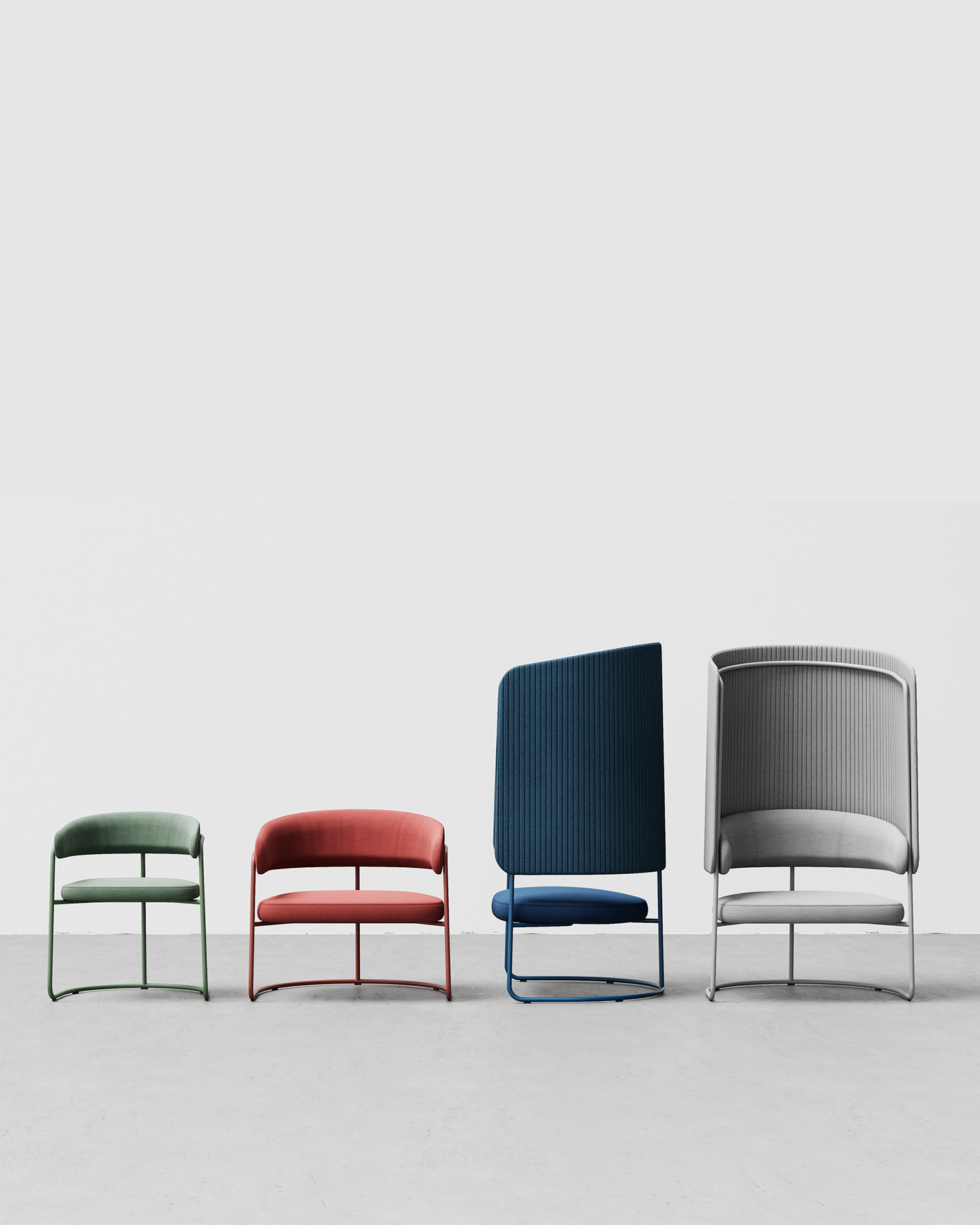
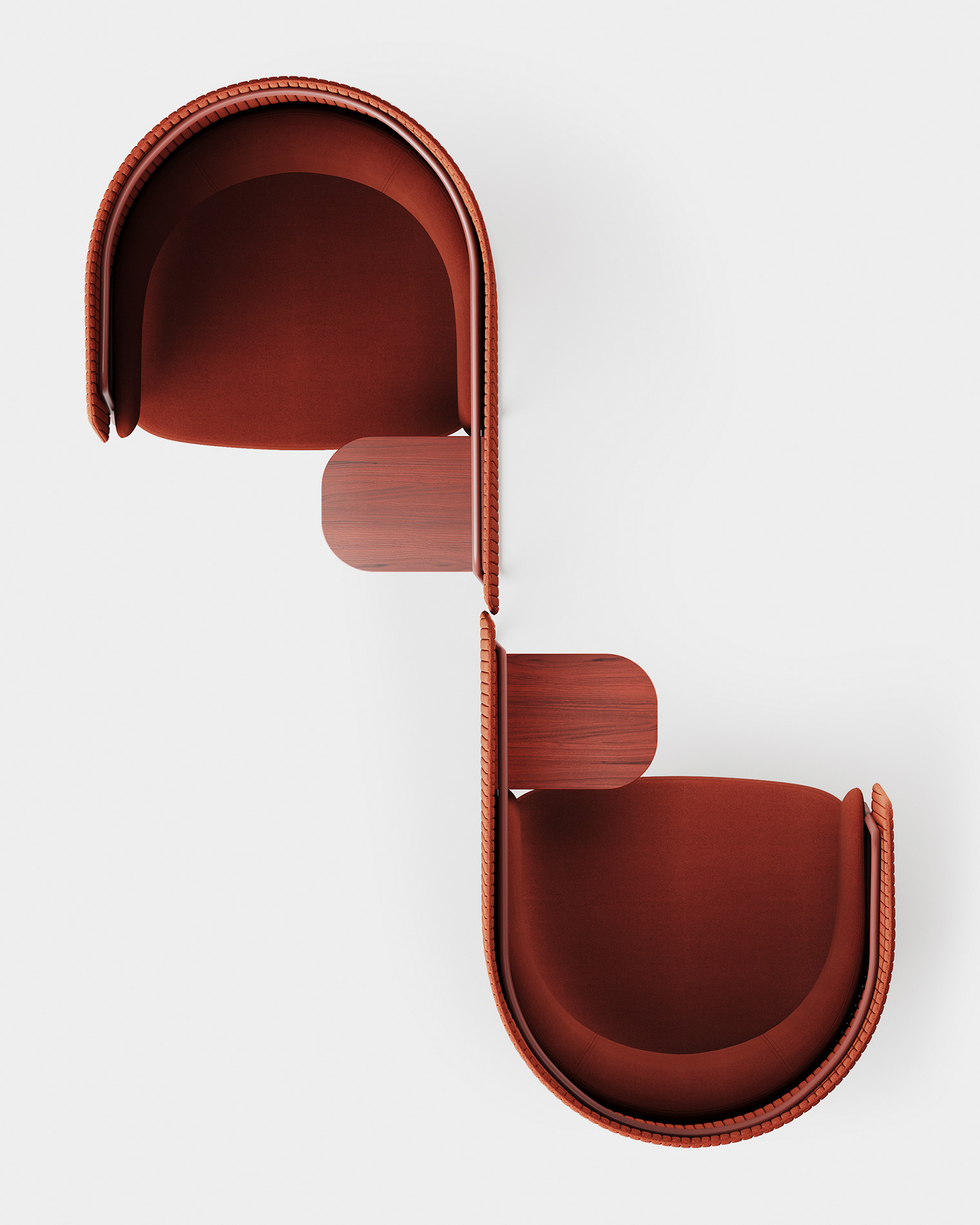
The collection is available in four versions: chair, lounge chair, high-back chair, and high-back chair with integrated table. All share the same constructive logic, light metal frames supporting seat and backrest to create a sense of shelter without visually overpowering the space.
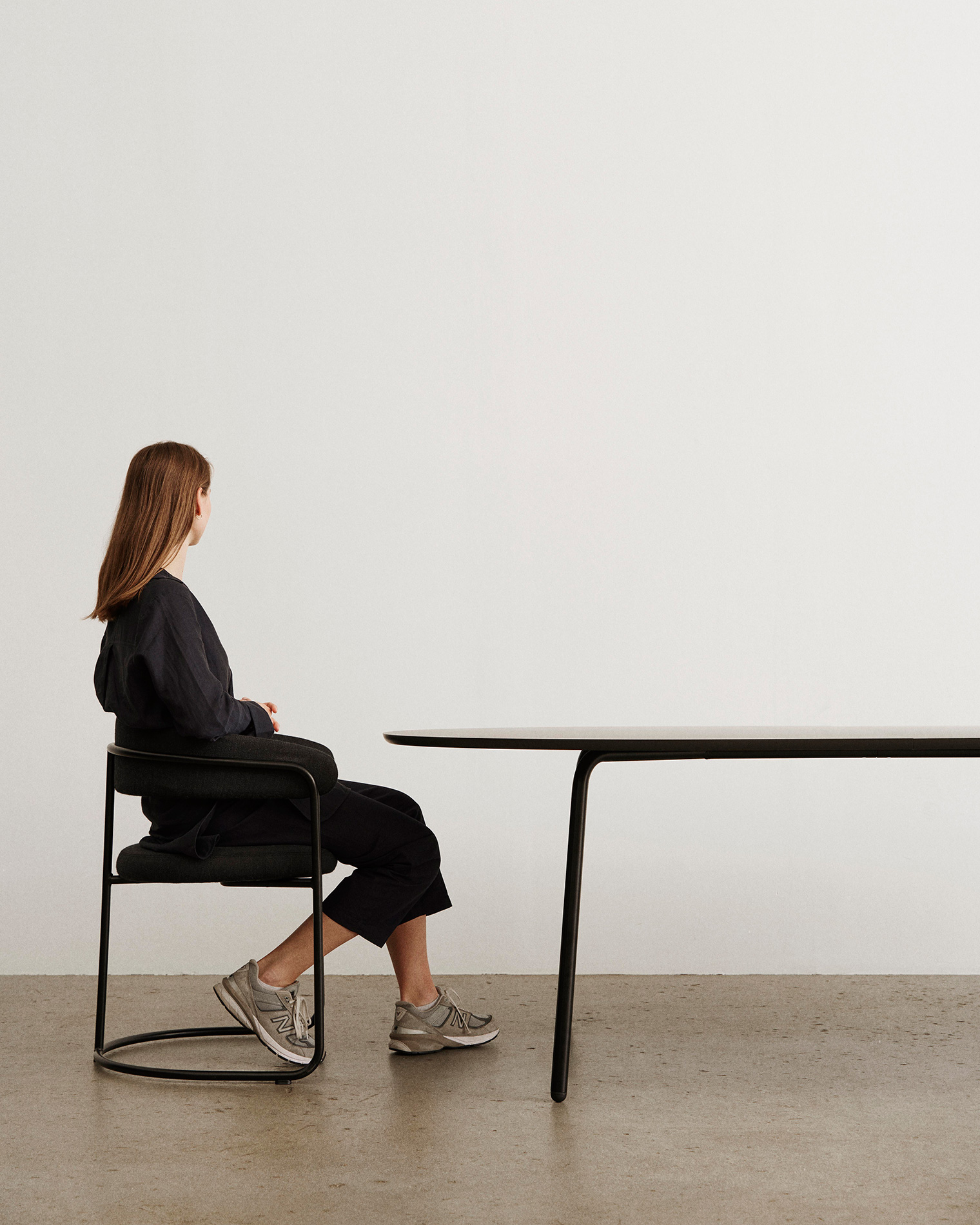
This approach to form and material allows Opus to integrate seamlessly into offices, libraries, educational settings or hybrid environments where work, pause and conversation coexist. Designed for extended use, the seating offers genuine comfort despite its deliberately lightweight structure. This is where its hybrid nature emerges: a single piece that facilitates both interaction and retreat, reflecting the way public spaces constantly shift between the social and the individual.
Visually discreet, the collection does not compete with architecture or its surroundings. It adapts, accompanies and resolves. Opus creates intimacy with the minimum, defining a personal realm while remaining connected to what is happening around it. A piece that understands privacy as something flexible and shared.
Related posts