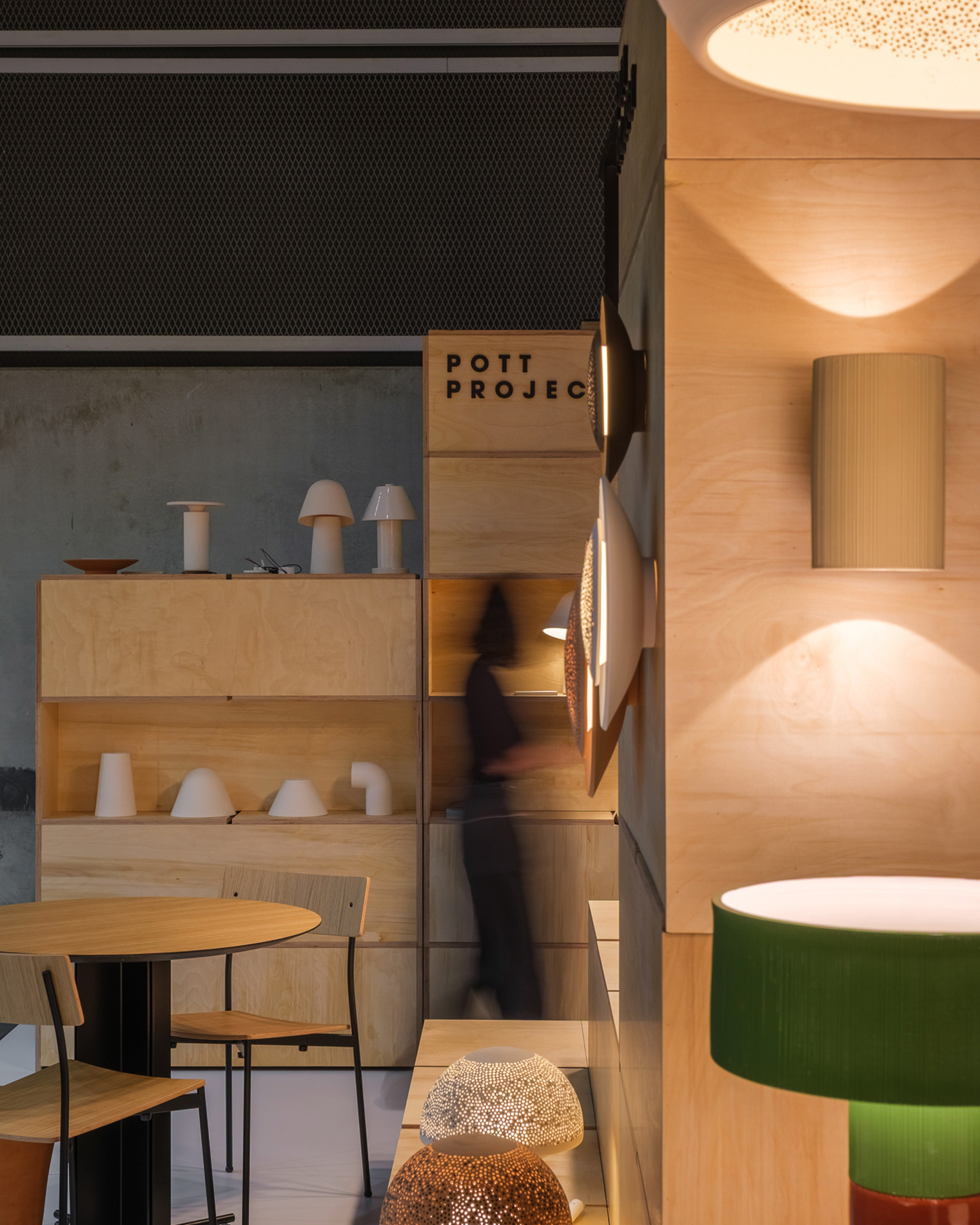
Pott Project presents new ways of bringing ceramics and light together.
Terra Brillo, Sponge Moss and Sponge Dome expand the possibilities of three Pott Project collections through new finishes, formats and ways of bringing light into the space.
Ceramics are the starting point, but also the material through which Pott Project continues to explore and experiment. Changing a finish, bringing a collection to the wall or shifting its scale can completely transform the relationship between a piece and the light.
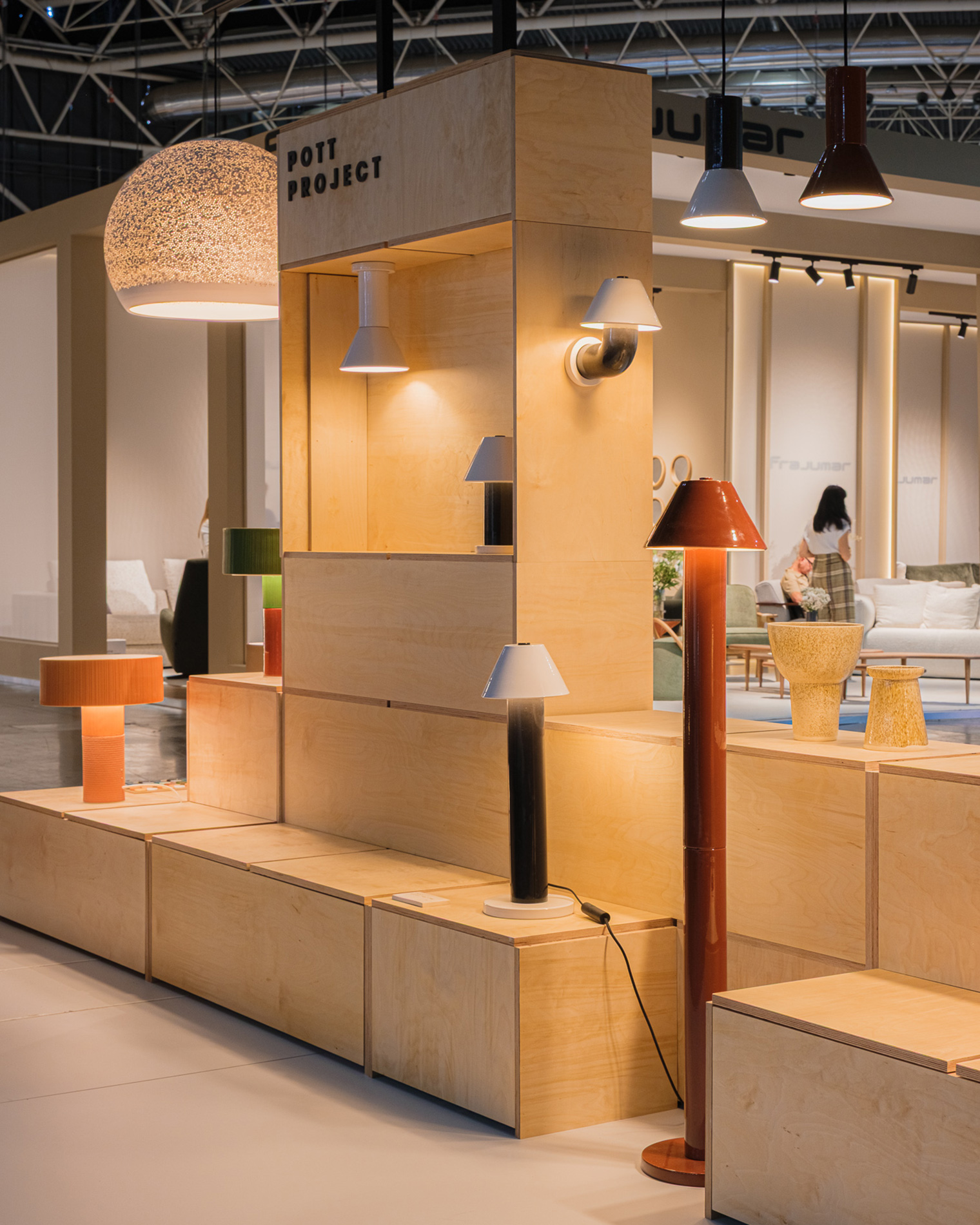
In Valencia, Pott Project presents three new designs driven by this same interest in exploring the possibilities of the material. Terra Brillo, Sponge Moss and Sponge Dome remain connected to the collections they come from, while introducing new ways of experiencing ceramics, their textures and the light that passes through or reflects across them.
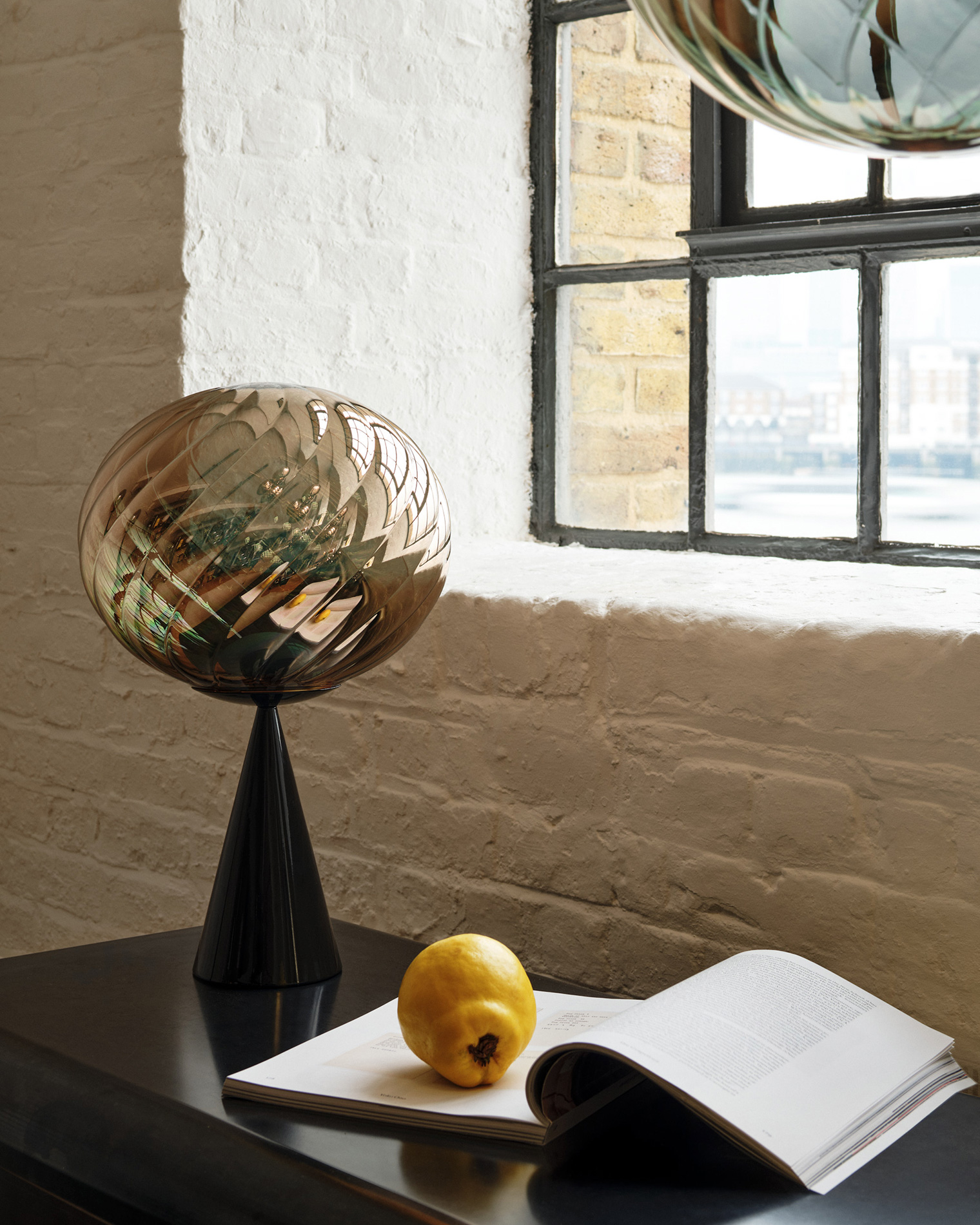
Terra Brillo. The same form, a different relationship with light.
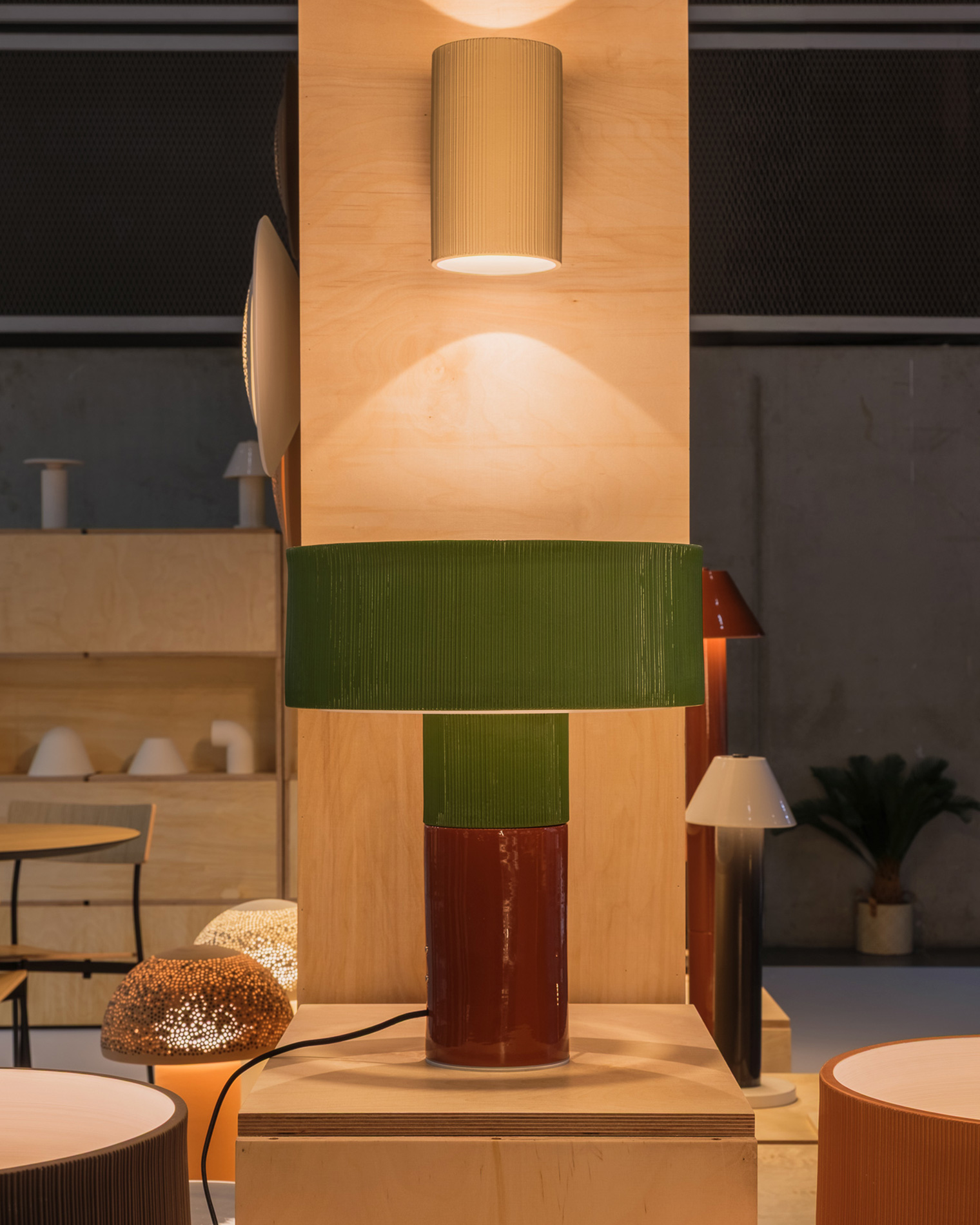
Terra, designed by Altherr Désile Park, now introduces a high-gloss finish that changes the way the ceramic interacts with light. The glazed surface captures reflections, follows the reliefs and gives the colour a different sense of depth.
The system retains its three bodies in different proportions, one smooth surface and three textures, which can be combined to create individual compositions. This freedom is now extended through two finishes: matt or gloss, although each composition is produced entirely in one finish.
The matt version preserves the warm, tactile presence of the ceramic. The gloss finish, by contrast, introduces a more dynamic dimension: light moves across the surfaces, enters the reliefs and changes the way the piece is perceived as the viewing angle shifts.
Sponge Moss. Ceramics reach the wall.
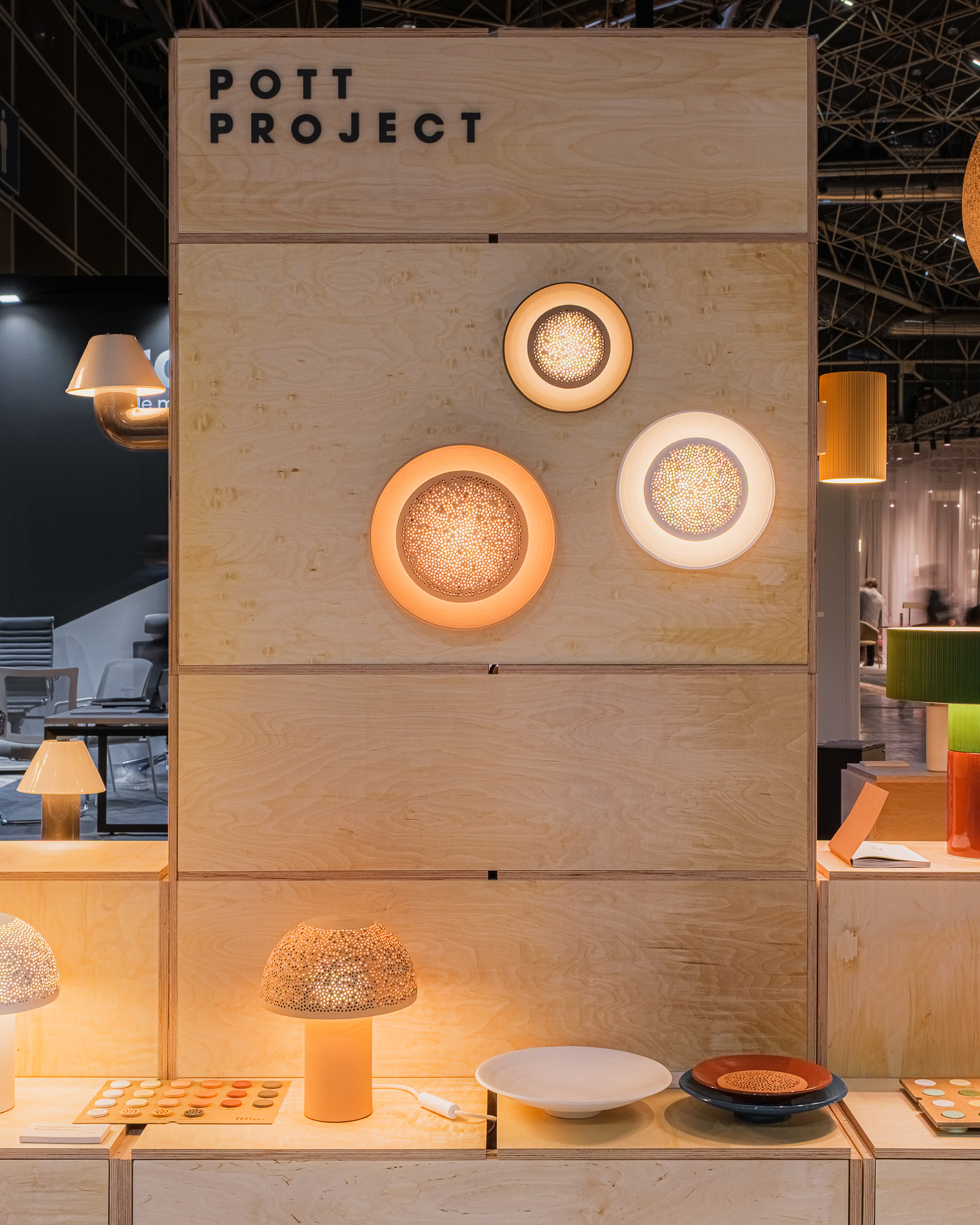
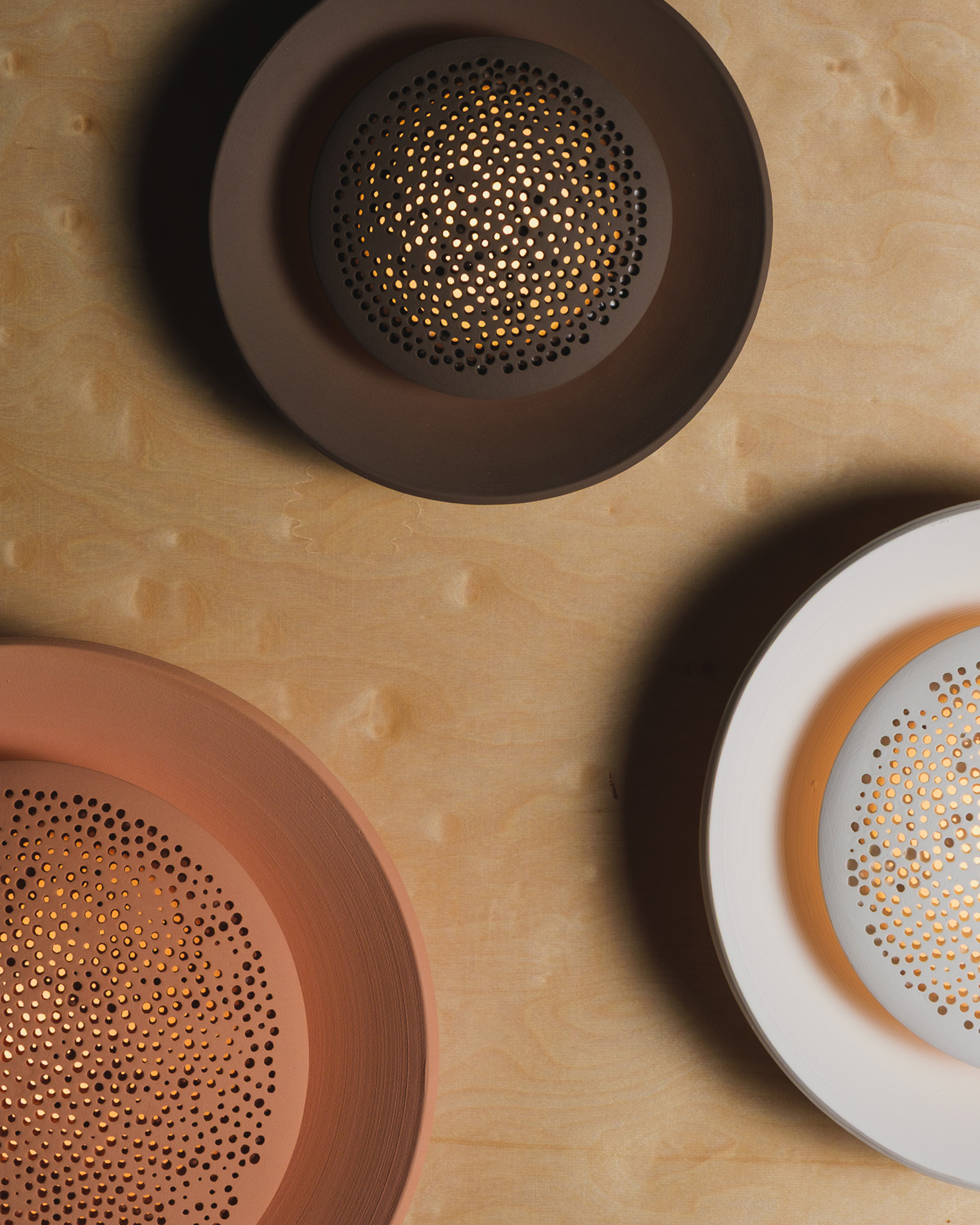
The Sponge collection, designed by Miguel Ángel García Belmonte, finds a new expression in Sponge Moss. Its familiar porous, perforated ceramic leaves the suspension behind to occupy a vertical surface, becoming a series of wall lights in different sizes and tones.
At the centre of each piece, the textured ceramic concentrates both the light and the evidence of the handmade process. A smooth surface surrounds it, creating a contrast between the two. When the light is switched on, the small perforations release points of light onto the wall, creating an interplay of shadows that changes with distance and position.
Its different formats allow wall compositions to be created from the same piece: repeated, separated or combined in different sizes. When the light is switched off, the texture and subtle variations of the handmade ceramic remain part of the composition.
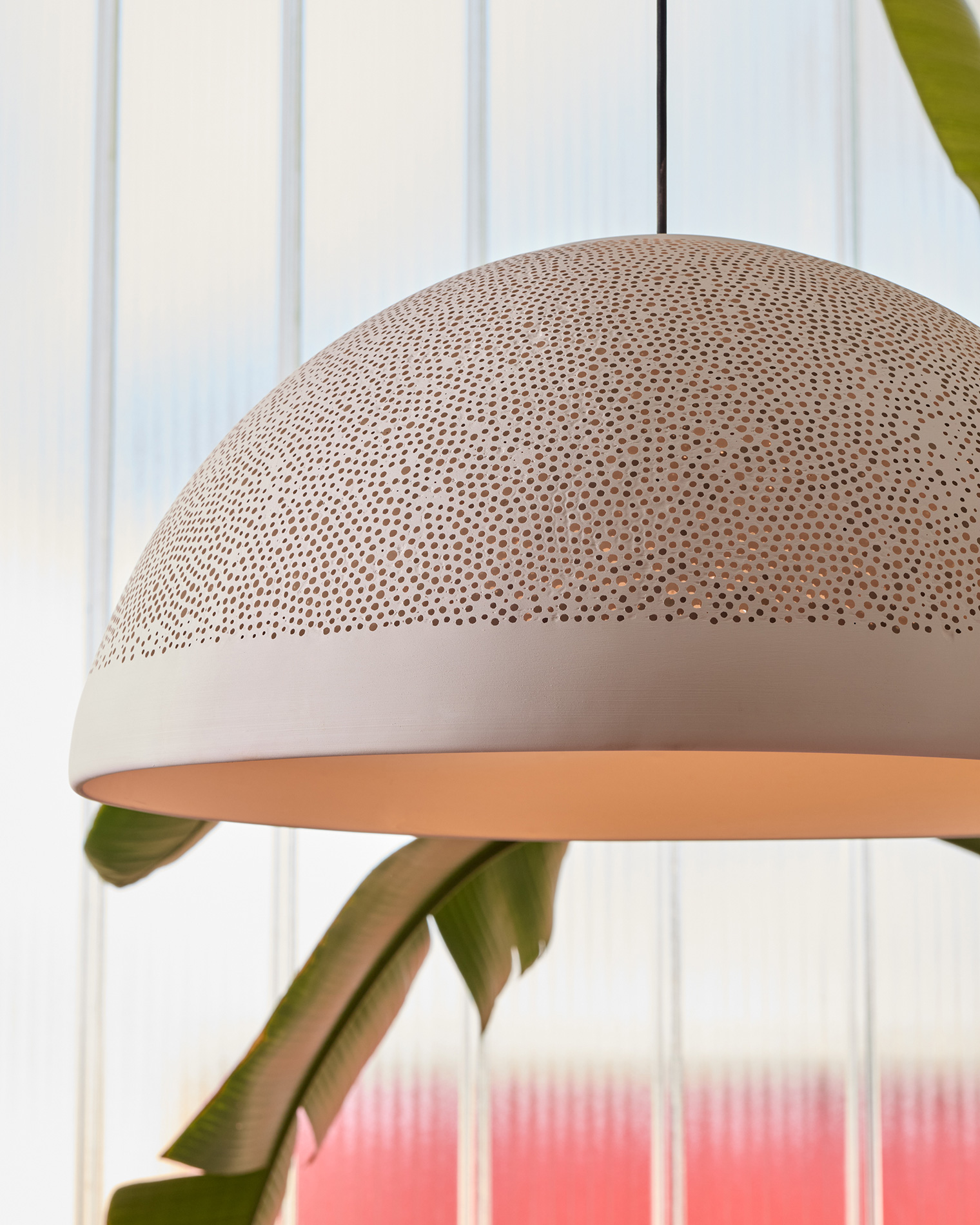
Sponge Dome. A new scale for perforated ceramics.
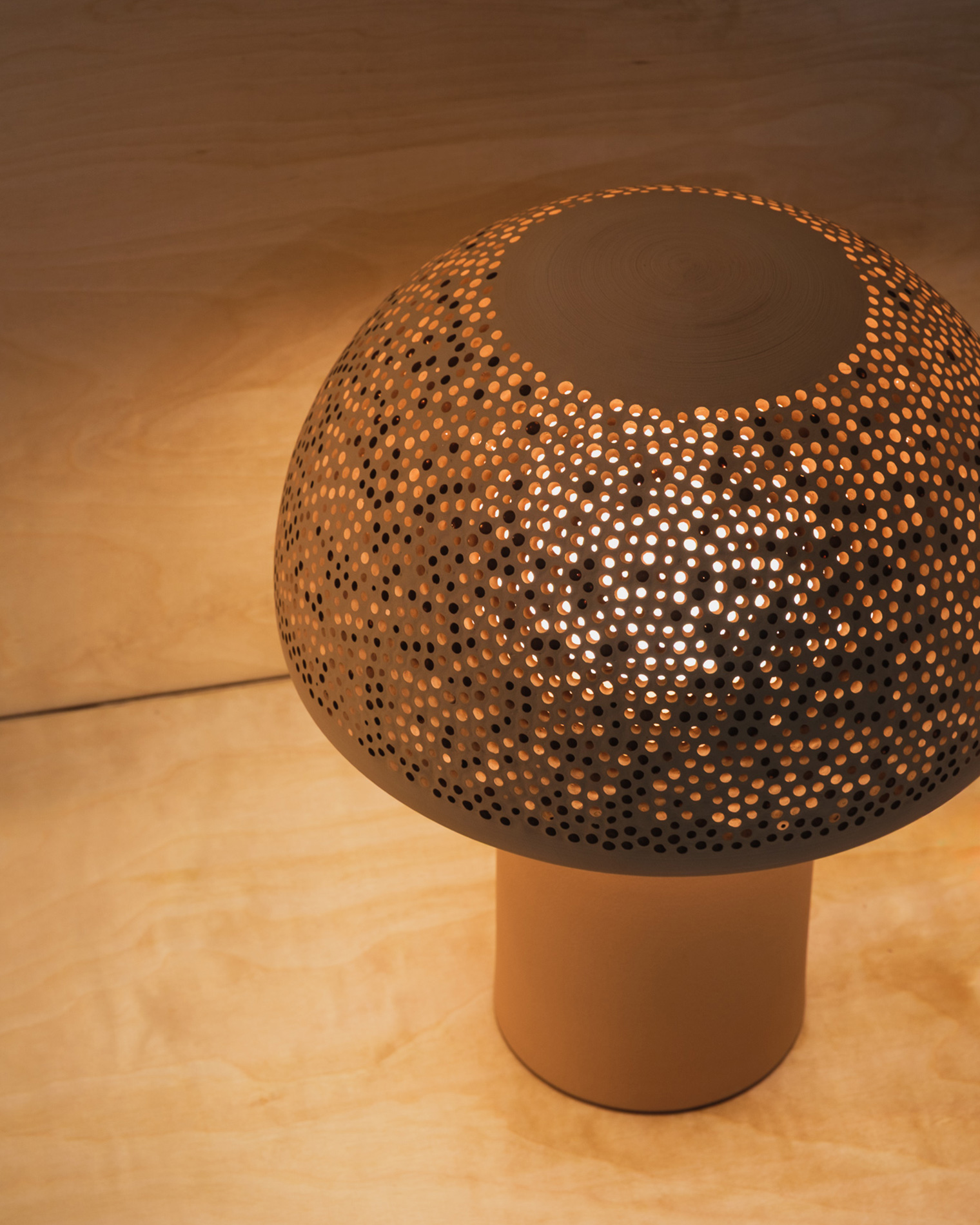
Also part of the Sponge collection, Sponge Dome brings its characteristic perforated ceramic to a closer, more intimate scale as a table light.
A dome covered in small openings rests on a cylindrical body containing the light source. Its glow gradually filters through the perforations, projecting a constellation of dots and shadows around the piece. The ceramic therefore takes on an active role in the way the light is experienced.
Its scale invites closer inspection: the texture, small irregularities and traces of the handmade process all become part of the experience of the piece. A different scale that makes the relationship between material and light especially tangible.
Ceramics as part of the light.
Terra Brillo, Sponge Moss and Sponge Dome begin with three different gestures: reflecting, perforating and containing light. Three ways of working with the same material and discovering what happens when its finish, format or relationship with the space changes.
What remains across all three is an approach to ceramics that lies at the heart of Pott Project: respect for craftsmanship, for the time involved in making each piece and for the small differences that allow every object to retain the trace of its maker.
Because at Pott Project, ceramics do more than contain light. They also shape the way light is perceived.
Related posts