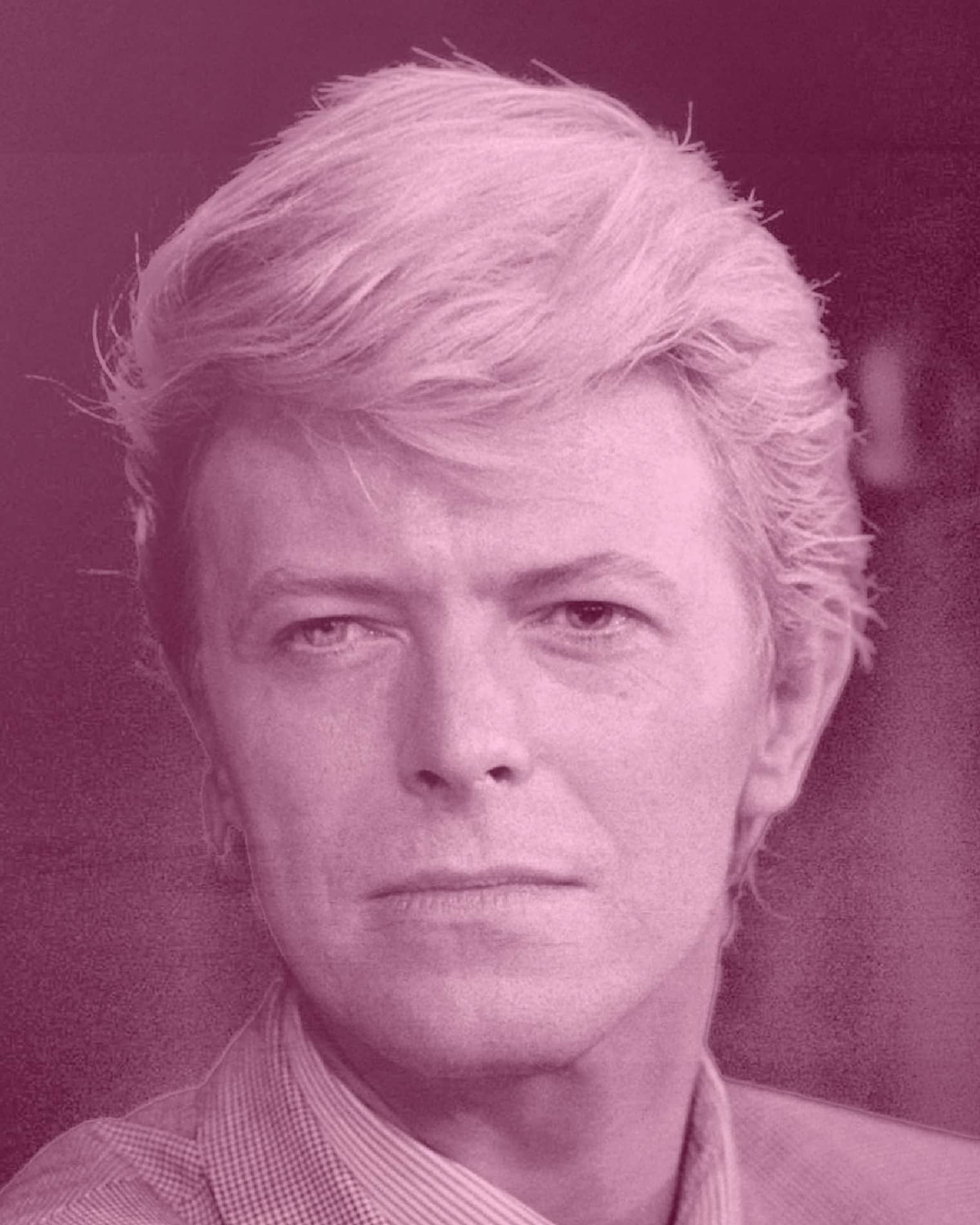
Identity in transformation.
For David Bowie, creating was not about defining a form, but inhabiting the process of transforming it. His trajectory does not follow a linear evolution, but a sequence of stages where each identity builds the next. There is no rupture, there is continuity in change.
Bowie understood that identity is not fixed, but an open construction. Each alter ego, each visual or sonic language, emerges from the same need: to explore without repeating. That freedom was not improvisation, but a profound form of coherence. Being true to himself meant never staying in the same place.
His work moves naturally across disciplines. Music, aesthetics, scenography, and image coexist as parts of a single discourse. Nothing is decorative. Every decision responds to a clear intention: to build a complete narrative where form and content sustain one another.
In this sense, David Bowie did not follow trends, he anticipated them. His ability to read context and reinterpret it allowed him to stay ahead of his time without losing authenticity. He did not seek to fit in, but to expand the limits of what was possible.
Beyond innovation, his true legacy is an attitude. Bowie taught us that change does not mean losing identity, but deepening it. That evolution is not a strategy, but the result of listening carefully to what has not yet taken shape.
In a context that tends toward repetition, his figure reclaims the value of the unique. Not as a gesture of difference, but as the result of an honest search. For him, creating meant embracing the risk of transformation. And within that constant movement, he found his language.
Related posts