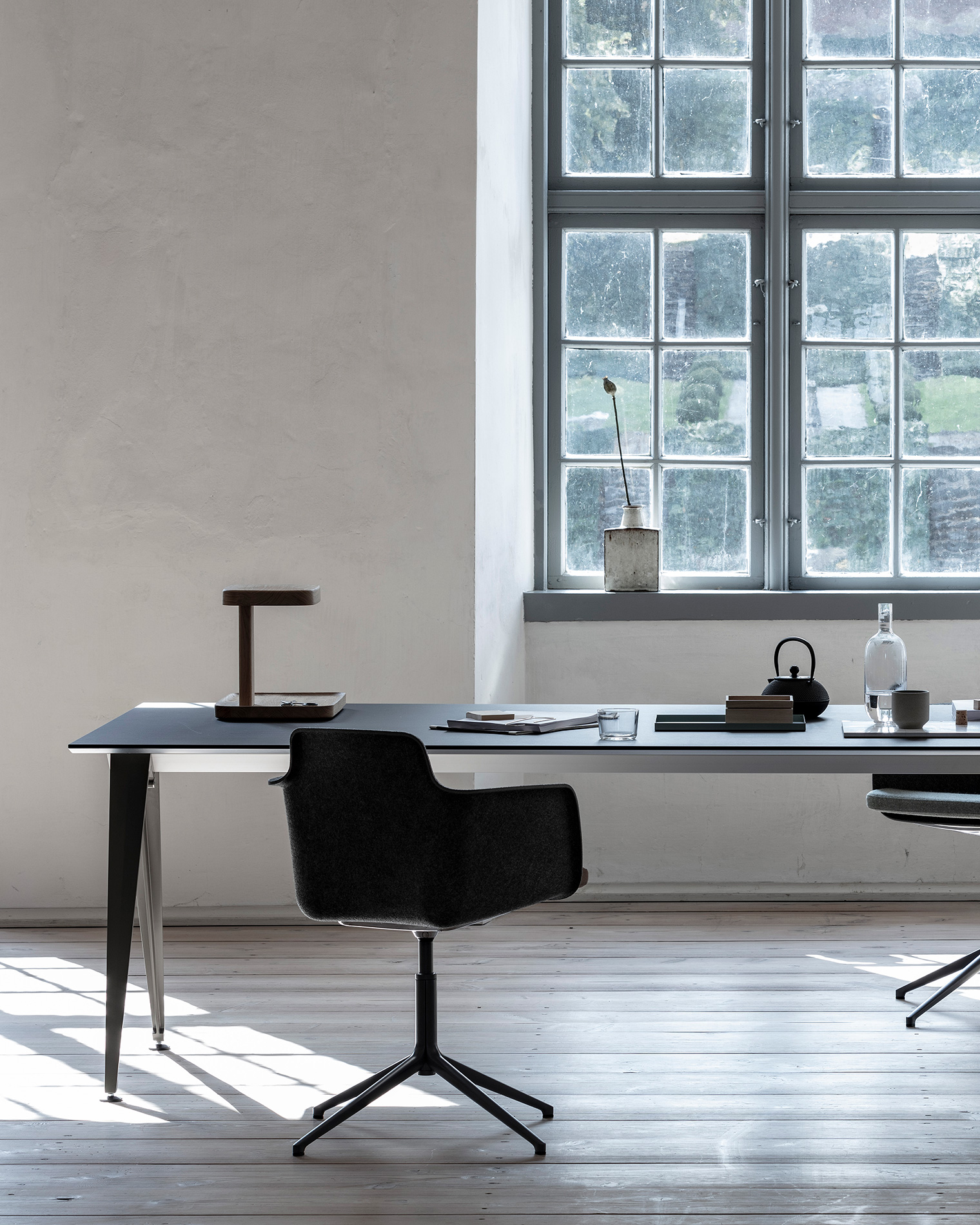
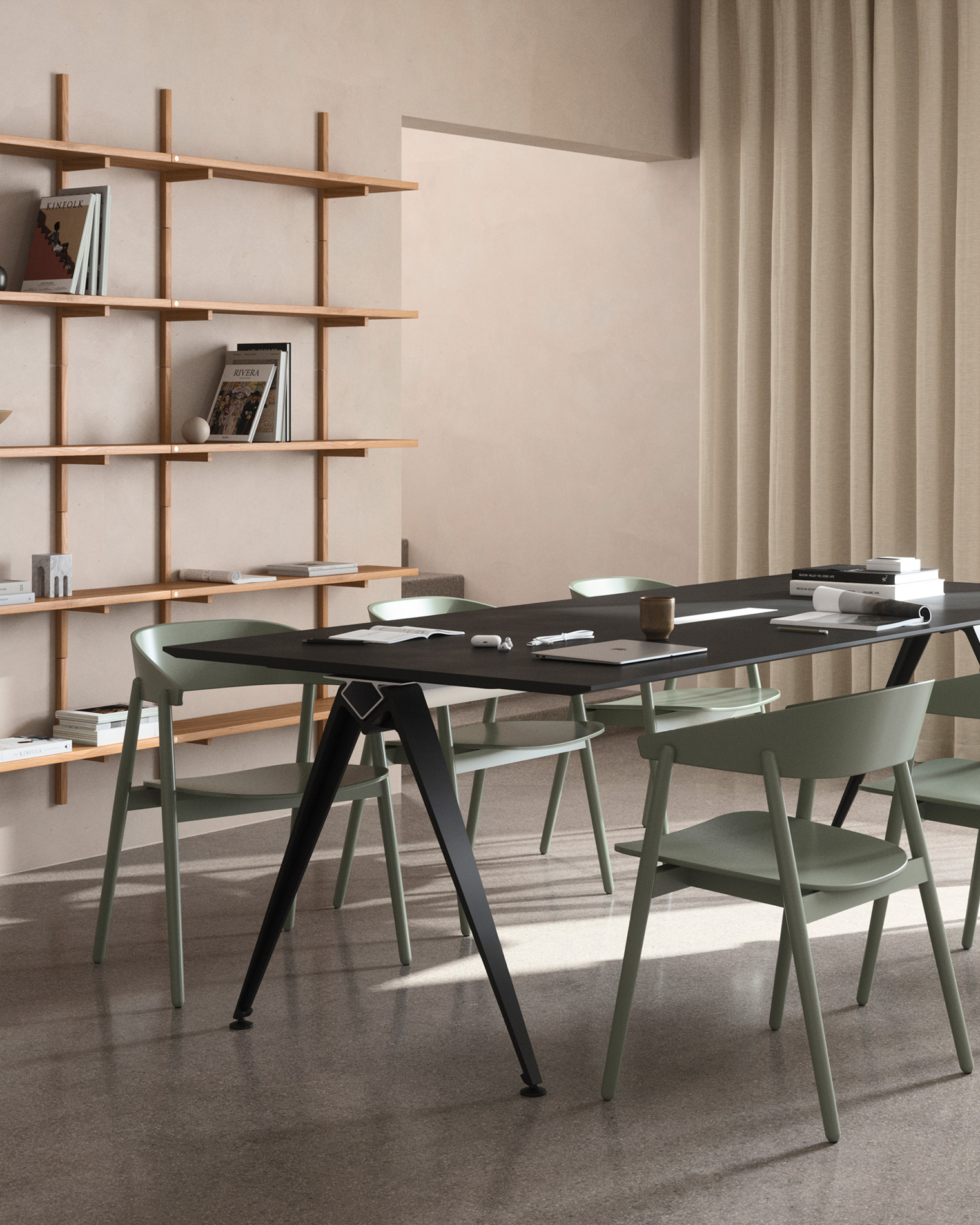
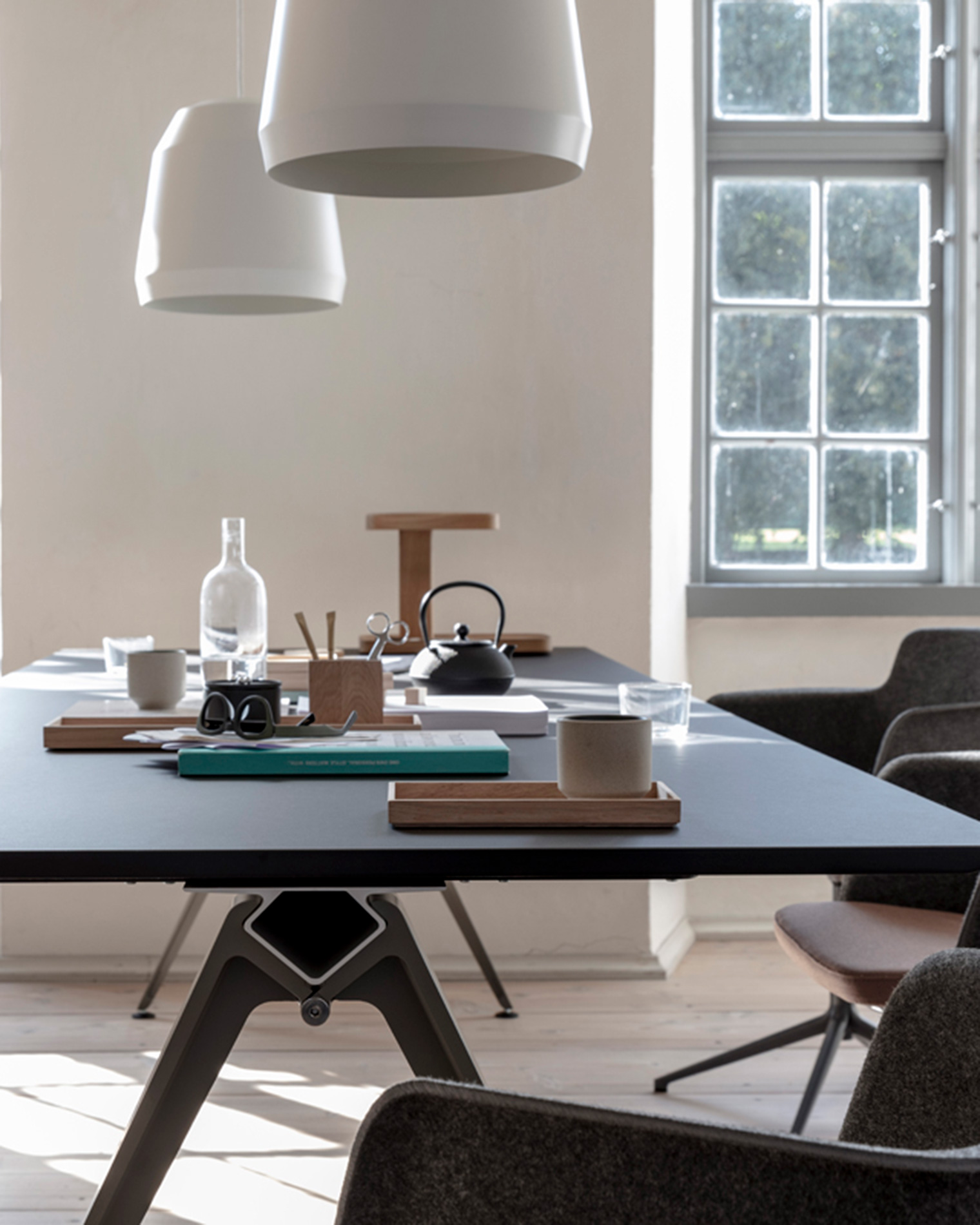

Grip Table by Andersen Furniture. Structure in tension.
There are designs understood through form. And others, like Grip Table, through the logic that sustains them. Conceived by Troels Grum-Schwensen, this table rethinks the relationship between visual lightness and structural stability, challenging gravity through a precise balance.
Grip Table is not just a table: it is a system. A modular design that can grow, connect, and adapt to different needs without losing coherence. Its presence is light, almost restrained, yet its construction reveals a rigorous engineering where every element fulfils a clear function.
Structure as language
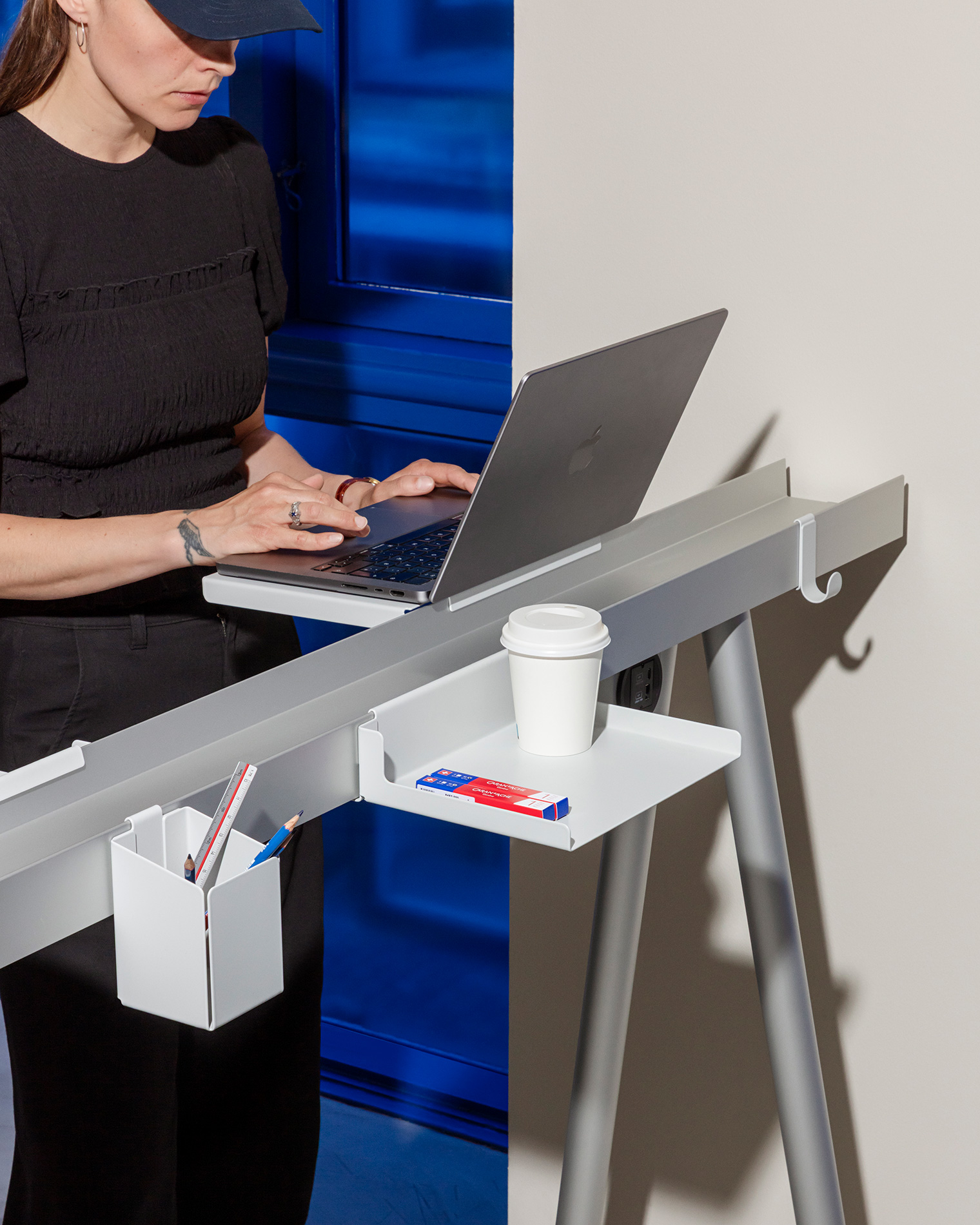
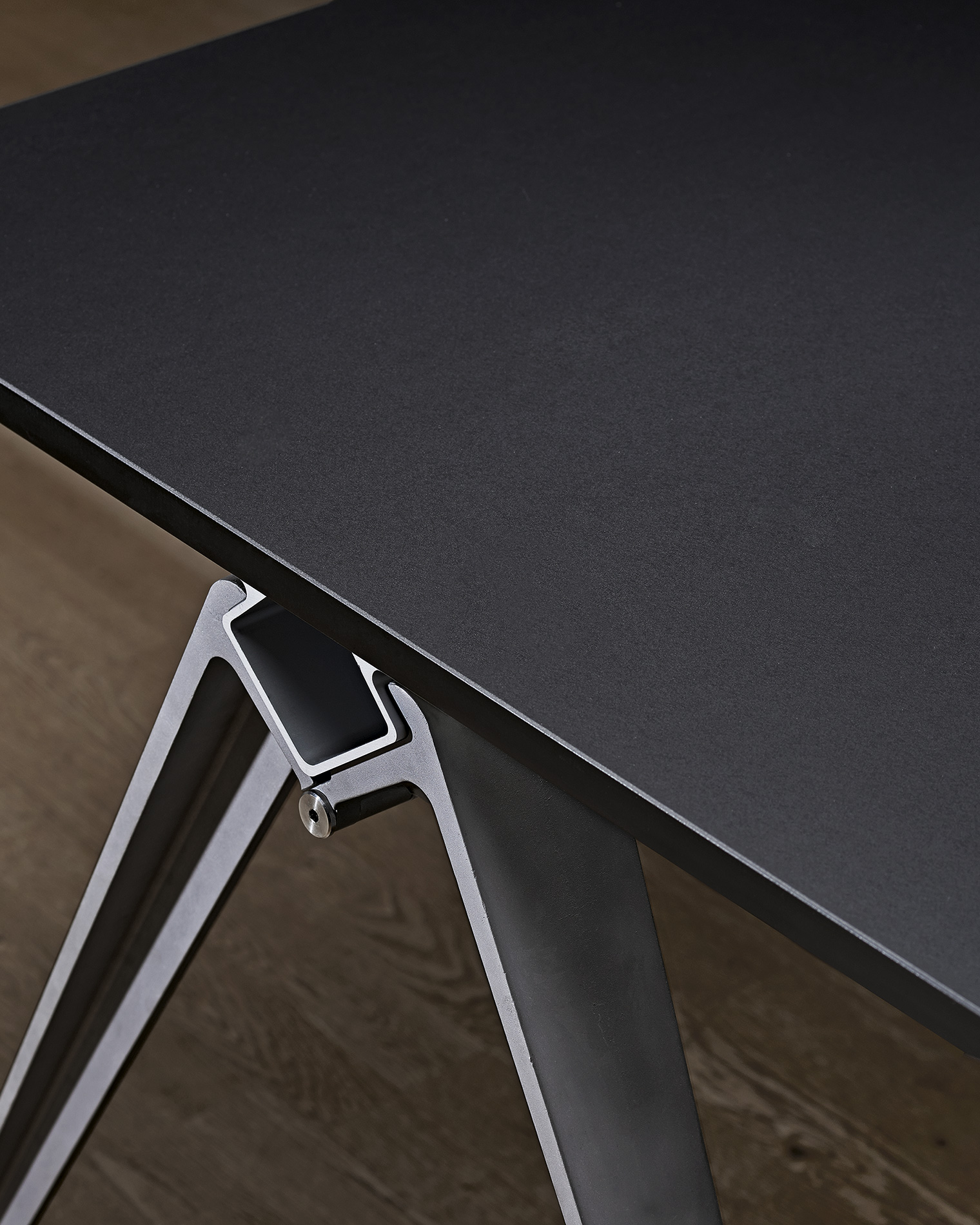
The central gesture of Grip Table defines the entire piece: the legs, like large clamps, embrace a longitudinal beam that acts as the structural axis. This solution not only resolves stability, but introduces a direct, honest, and legible visual language.
The legs are detachable and adjustable, allowing their position to be modified according to use. A table that frees up space beneath it, bringing flexibility and lightness to the environment.
Open system, flexible use.
Designed to evolve, Grip Table can be extended and connected with other tables from the same system, responding to changing configurations in workspaces, meeting areas, or domestic settings. The optional integration of a power box reinforces its functional character, adapted to contemporary needs.
In Grip Table, innovation is expressed through precision. A system that turns structure into the protagonist, demonstrating that when technique is clear, form becomes inevitable.
Colour, material, and precision.
Its tabletop, with a depth of 80 cm and a thickness of 20 mm, is available in different materials: HPL laminate, Fenix, or linoleum.
The option of FSC®-certified wood adds a responsible dimension, aligned with a conscious approach to design. Each finish brings a specific quality, from technical resistance to tactile softness, without altering the clarity of the whole.
The metal structure, available in a wide chromatic range, from neutral tones to more expressive hues such as terracotta or dusty green, allows its presence to be tuned to the context.
Related posts